Live Webinar - Nov 3, 2026 @ 4PM CET - What's Still Missing From Your EUDR File

Tracking the Nakilat LNG fleet during the Strait of Hormuz closure

07/05/26: A two-week record of where Qatar's LNG carriers went when the chokepoint shut.
In late February 2026, the Strait of Hormuz closed to LNG traffic and QatarEnergy LNG declared force majeure. Over the following weeks, Orbify tracked the Nakilat fleet, the 69 LNG carriers owned or co-owned by Nakilat, as it adjusted to the closure.
This piece collects that tracking record. It was originally published as a series on LinkedIn between 23 April and 7 May 2026, and is reproduced here as a historical reference. The data and screenshots are as captured at the time and have not been updated.
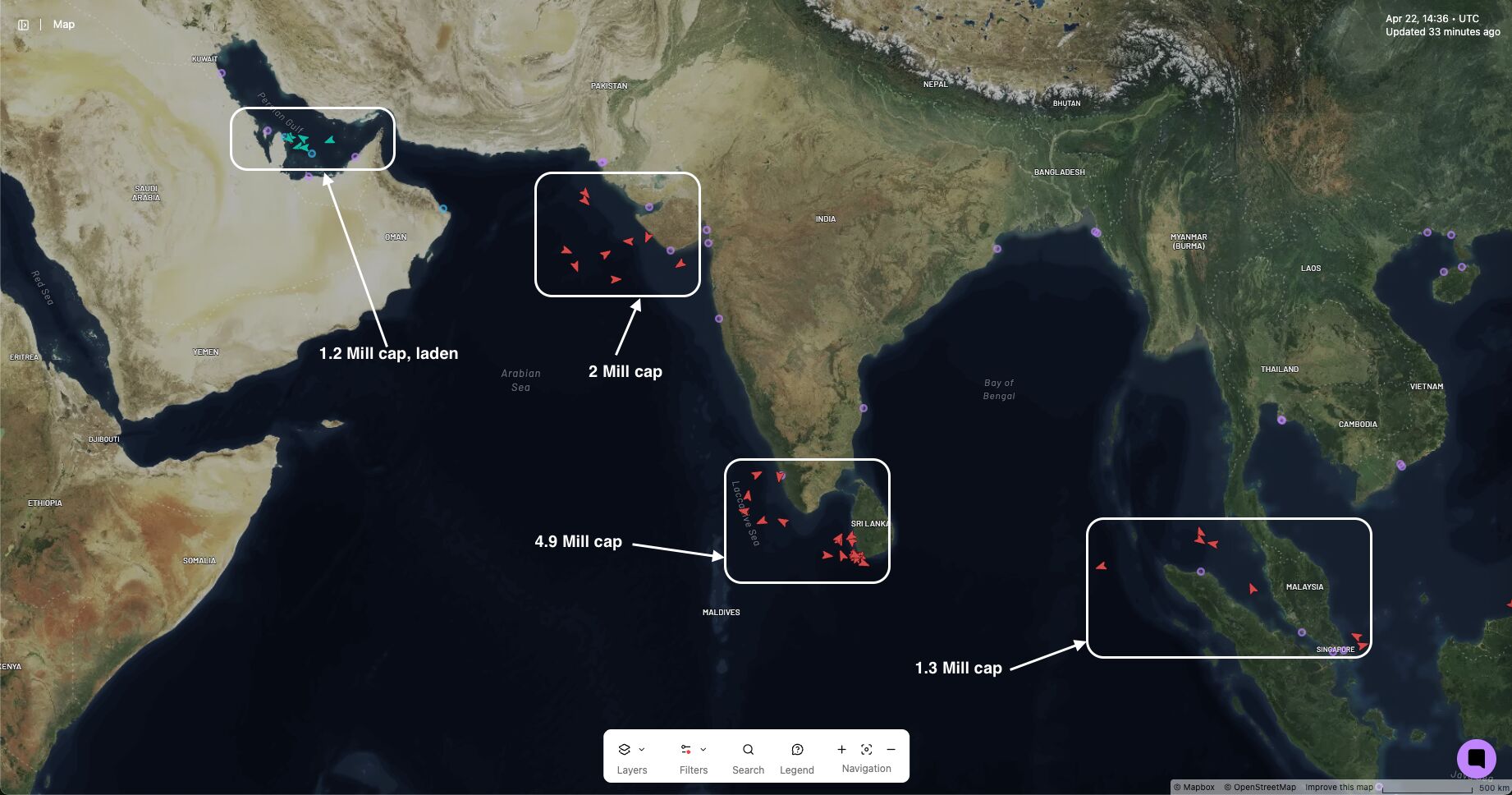
As of 22 April, 44 of the 69 carriers, a combined 9.4M m³ of capacity, are holding in place across four clusters.
1. Persian Gulf: 6 laden tankers, combined 1.2M m³. One ballast tanker is also holding inside the Gulf at 216k m³.
2. West India and Pakistan coast: 9 ballast vessels, 1.99M m³ combined.
3. Southwest India and Sri Lanka: 21 ballast vessels, 4.7M m³ combined. Nine of these are Q-Max, the 266k m³ class.
4. Off Malaysia: 7 ballast vessels, 1.29M m³ combined. Five idling, two transiting slowly, one toward Sri Lanka and one back toward Ras Laffan.
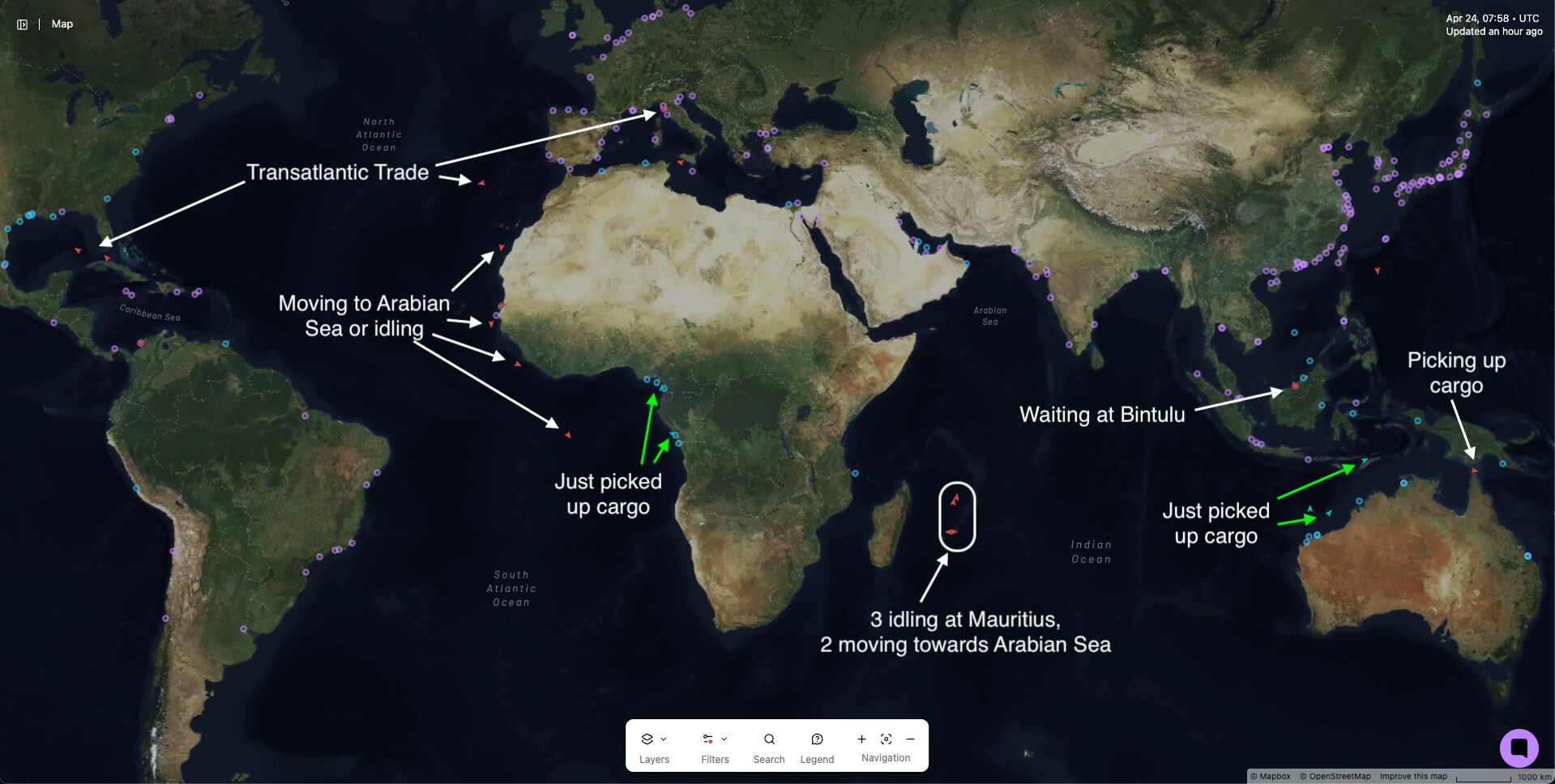
As of 24 April, the other 25 carriers sit outside those clusters. Thirteen are in active trade, across four regions.
1. Trans-Atlantic, US-linked trade: 4 vessels.
2. Australia: 4 vessels. Three laden tankers outbound for Asian buyers, with origins at Pluto LNG, North West Shelf LNG and Gorgon LNG; one ballast vessel approaching Australia Pacific LNG.
3. Malaysia, Bintulu: 2 vessels.
4. West Africa FLNG terminals: 3 vessels. Two laden, just departed Cameroon FLNG and Eni Congo; one ballast at anchor off Greater Tortue Ahmeyim FLNG.
The remaining 12 sit outside both groups: 9 ballast vessels positioning across the Atlantic and Indian Ocean, some idling and some moving toward the Arabian Sea, plus 3 with unclear AIS status. On the map below, laden vessels are marked with a green arrow.
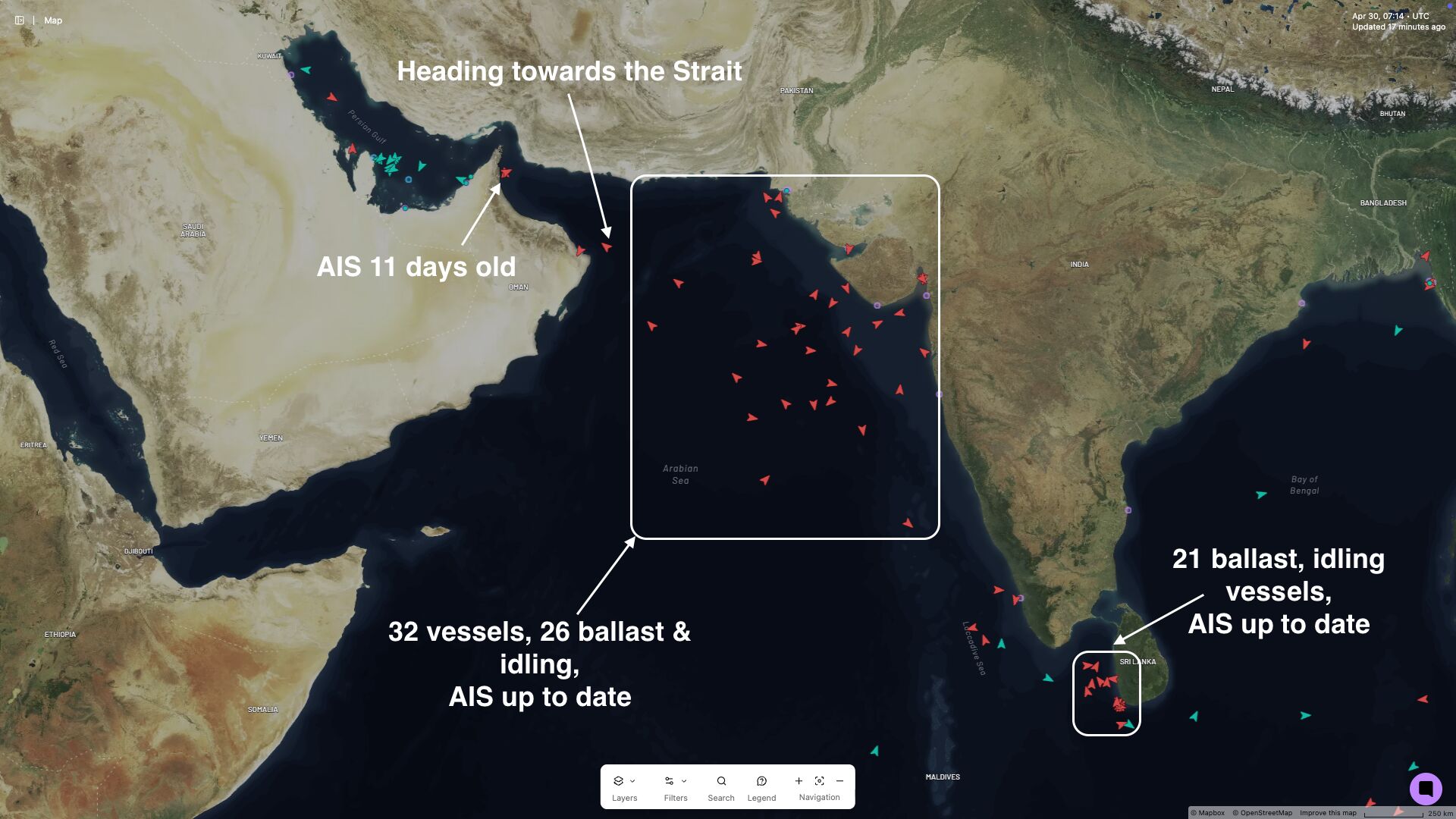
Not every signal near the Strait comes from the Nakilat fleet. As of 30 April, two LNG tankers have transmitted no AIS for 11 days, both owned by National Gas Shipping Co.
AL HAMRA and MRAWEH, 135,000 m³ each and both ballast, last transmitted on 19 April. AL HAMRA was still underway, making 11.8 kn toward Fujairah, when she went dark. MRAWEH was at anchor off Khor Fakkan. A third National Gas Shipping Co vessel, UMM AL ASHTAN, also 135,000 m³, is heading toward the Strait at 15.8 kn. Since 2024, all three have consistently served the Das Island LNG Terminal in the UAE.
Beyond those three, 26 other ballast and idle LNG tankers are holding across the Arabian Sea, all with AIS signals no older than 12 hours. A further 21 are holding near Sri Lanka, also with current signals.

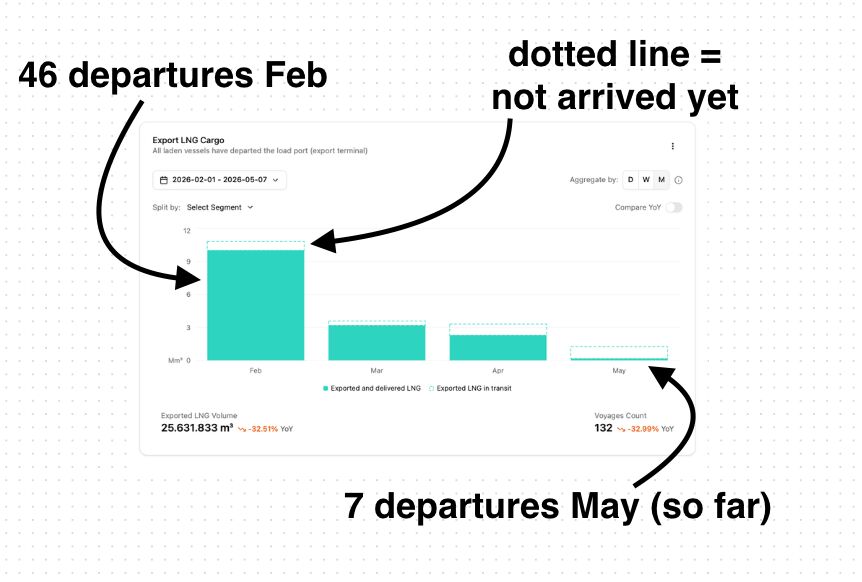
By early May, the closure is visible in the departure counts. Since the Strait of Hormuz closed on 28 February, Nakilat fleet departures from liquefaction terminals have collapsed from 46 vessels in February to 16 in March, 16 in April and 7 in May to date.
Deliveries at import terminals continued through March and April as vessels already at sea completed their voyages. As of 6 May, six laden Nakilat-related vessels remain inside the Gulf, a combined capacity of about 1.2M m³, unchanged since mid-February.
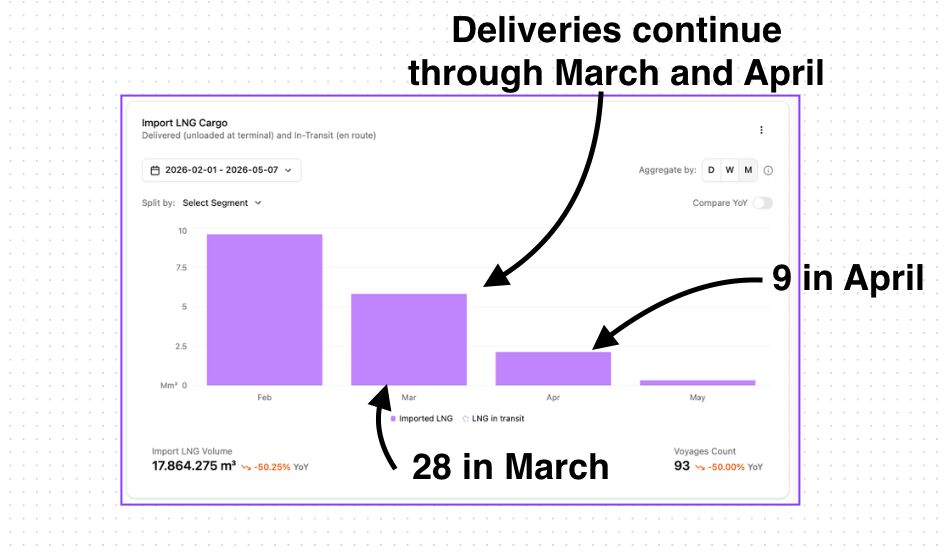
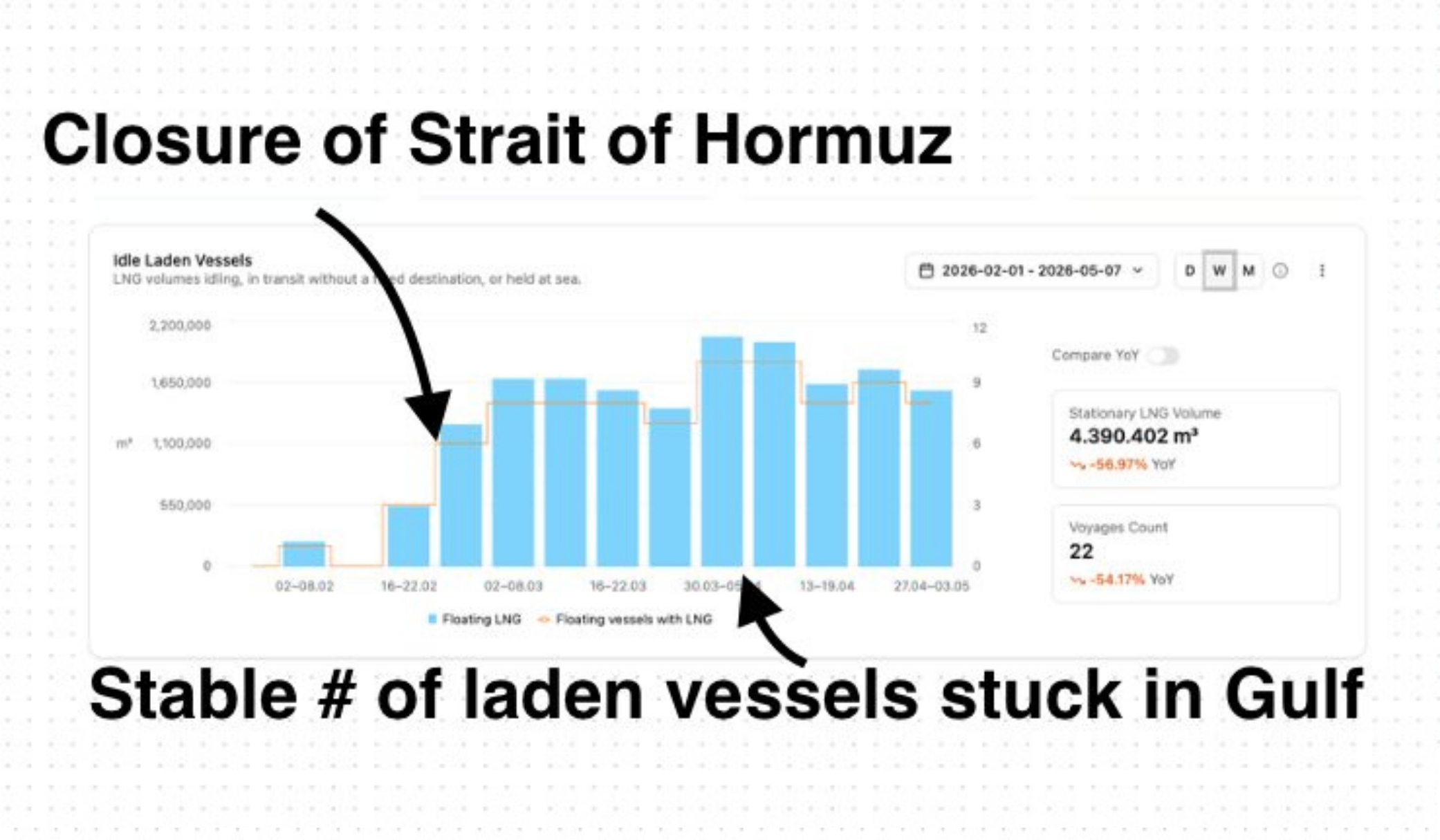
All data: Orbify platform. Fleet filter: Nakilat-owned and Nakilat co-owned vessels.
Orbify monitors vegetation threats, climate risks, and infrastructure changes across your entire network — so you can prevent outages, optimize maintenance, and stay compliant.
Start with a 4-week pilot on your priority corridors. No enterprise contracts. No multi-month implementations. Just results you can verify against field data.