











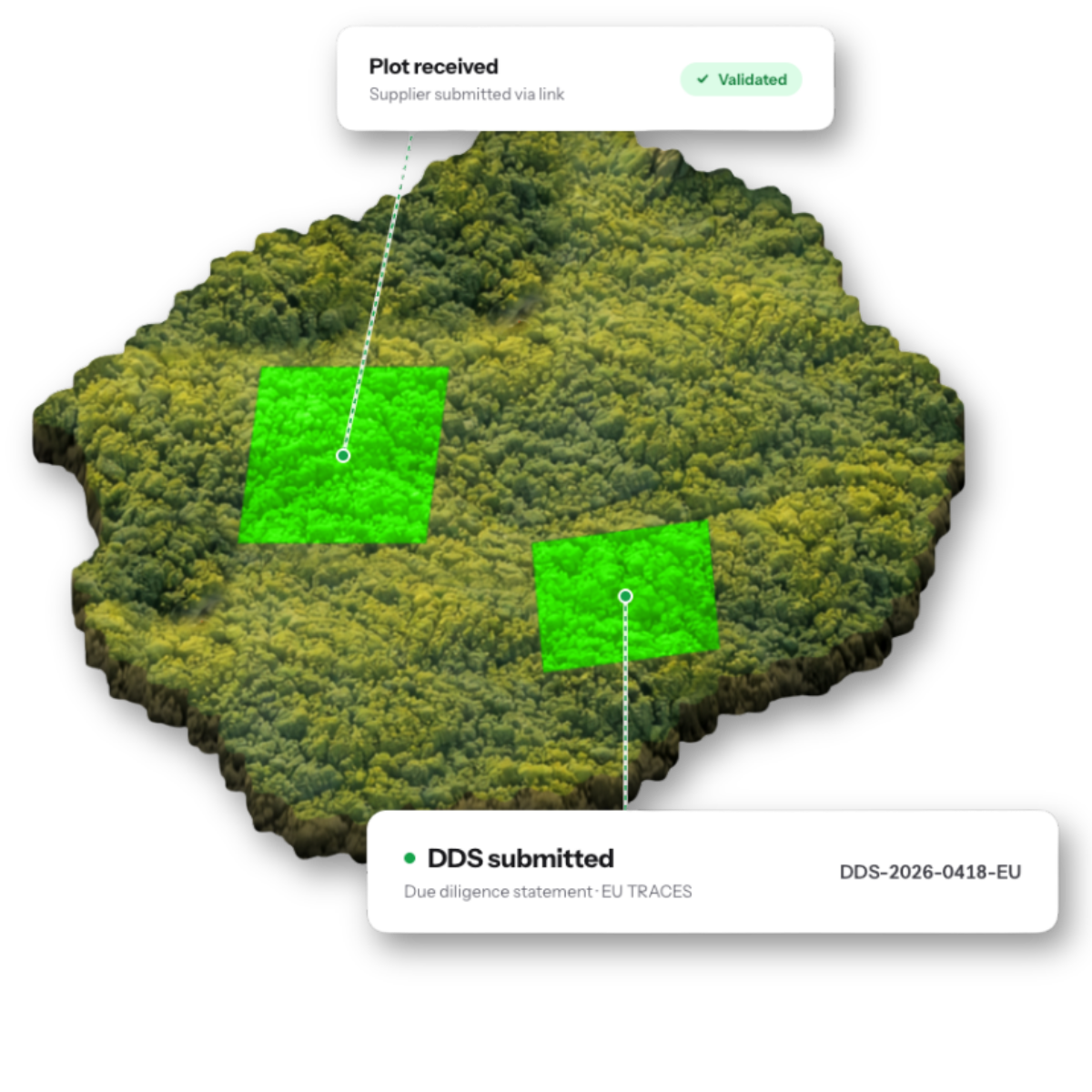
Since the December 2025 amendment, only the company that first places the product on the EU market, or exports it, files. Everyone further down the chain keeps records instead.
| Your role | What you file |
|---|---|
| Medium or large operator (first to place on the EU market, or export) | A due diligence statement before placing or export, from 30 December 2026. One statement can cover several batches and can be prepared up to a year ahead. |
| Micro or small operator | Due diligence statements from 30 June 2027 (30 December 2026 for timber products already covered by the EU Timber Regulation). |
| Micro or small primary operator in a low-risk country, placing its own products | A one-off simplified declaration instead. Its identifier is passed to buyers. |
| Downstream operator or trader | No statement. Keep records of who supplied you and who you sold to. Companies that are not SMEs must register in the information system. |
The statement is short. The work is in the evidence behind it, which you keep for five years.
Steps 2 to 7, done for you
Suppliers submit plots by link, with no account or GIS software. Orbify validates each plot, screens it against satellite imagery, records the risk assessment and files the statement through the EU information system's API.

Four things stand between you and a filed statement. Orbify does all four.
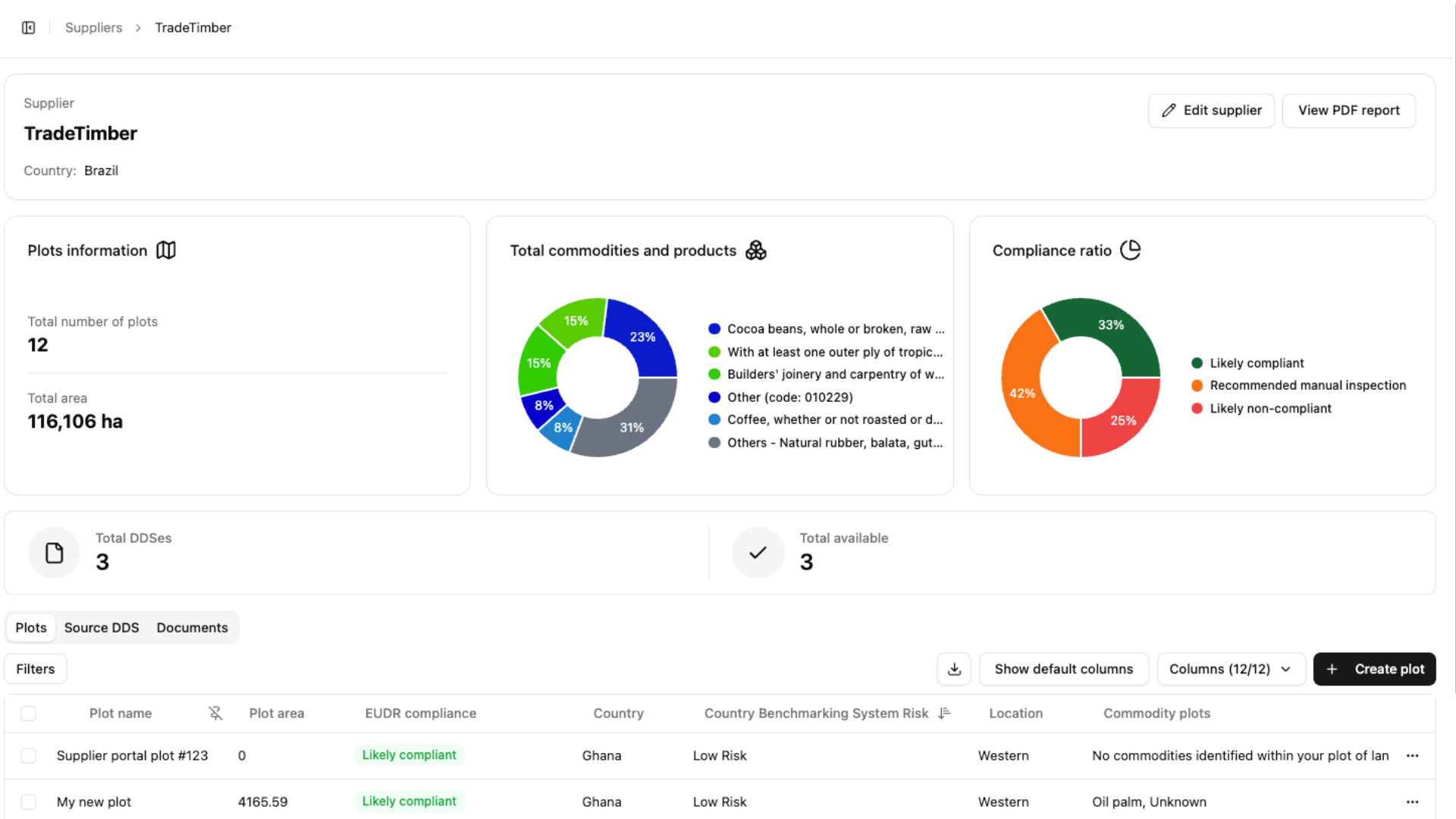
Suppliers submit their plots through a secure link. No account, no GIS software, no training.
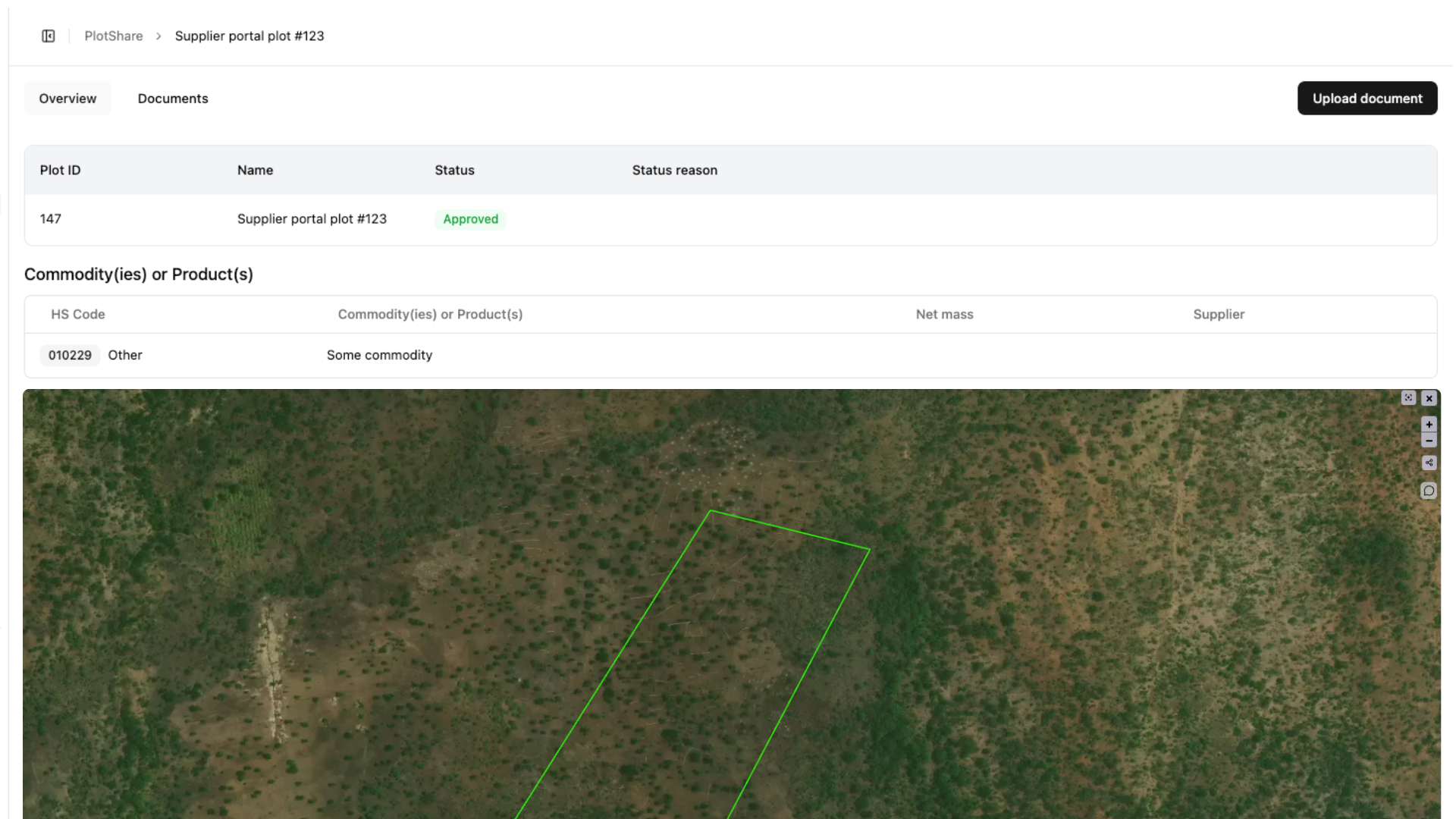
Geometry and format errors surface at collection, not when TRACES rejects your file.
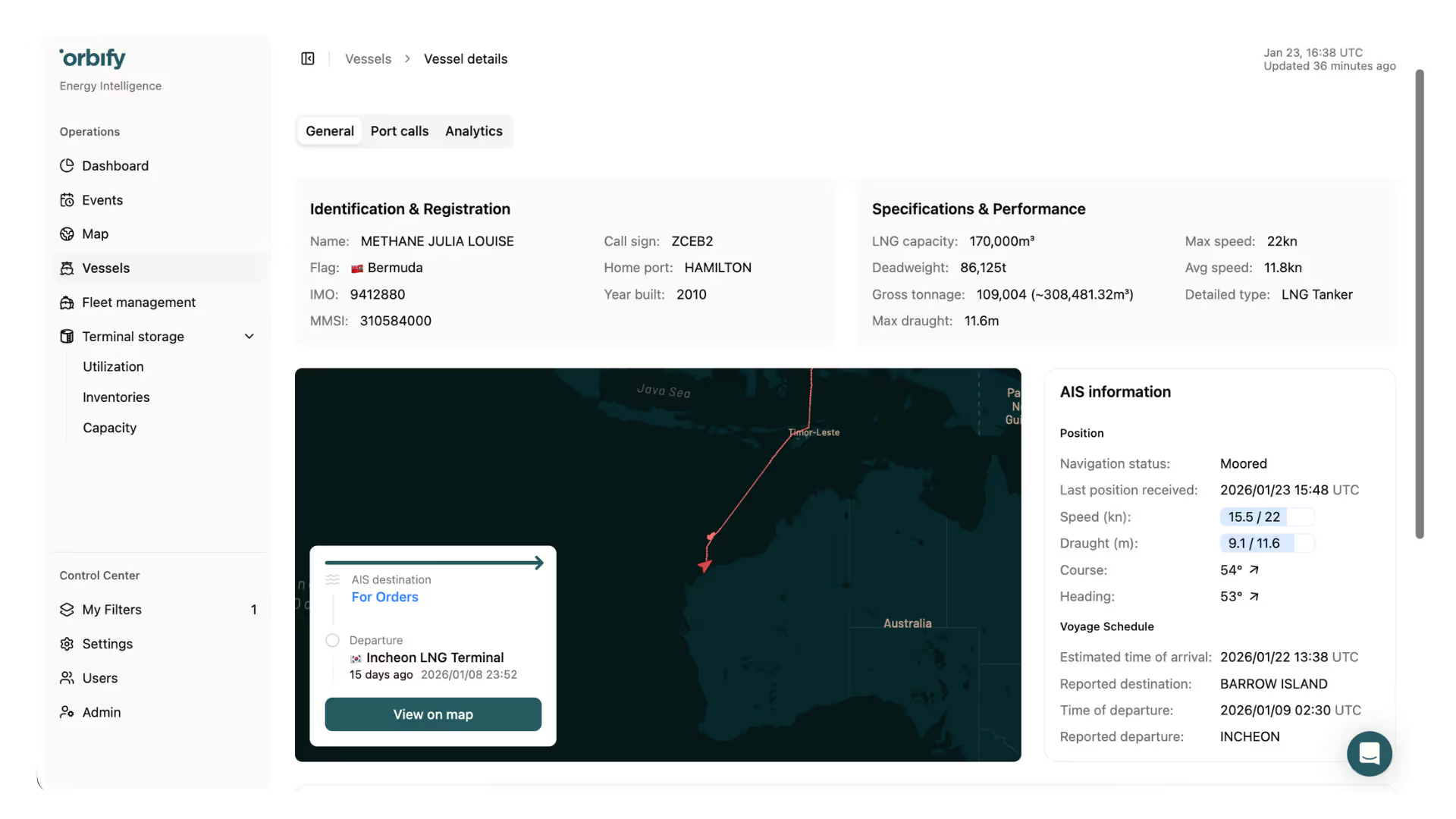
Run custom-configured automated diversion detection 24/7. Set up automated notifications on events and vessel movements in minutes.
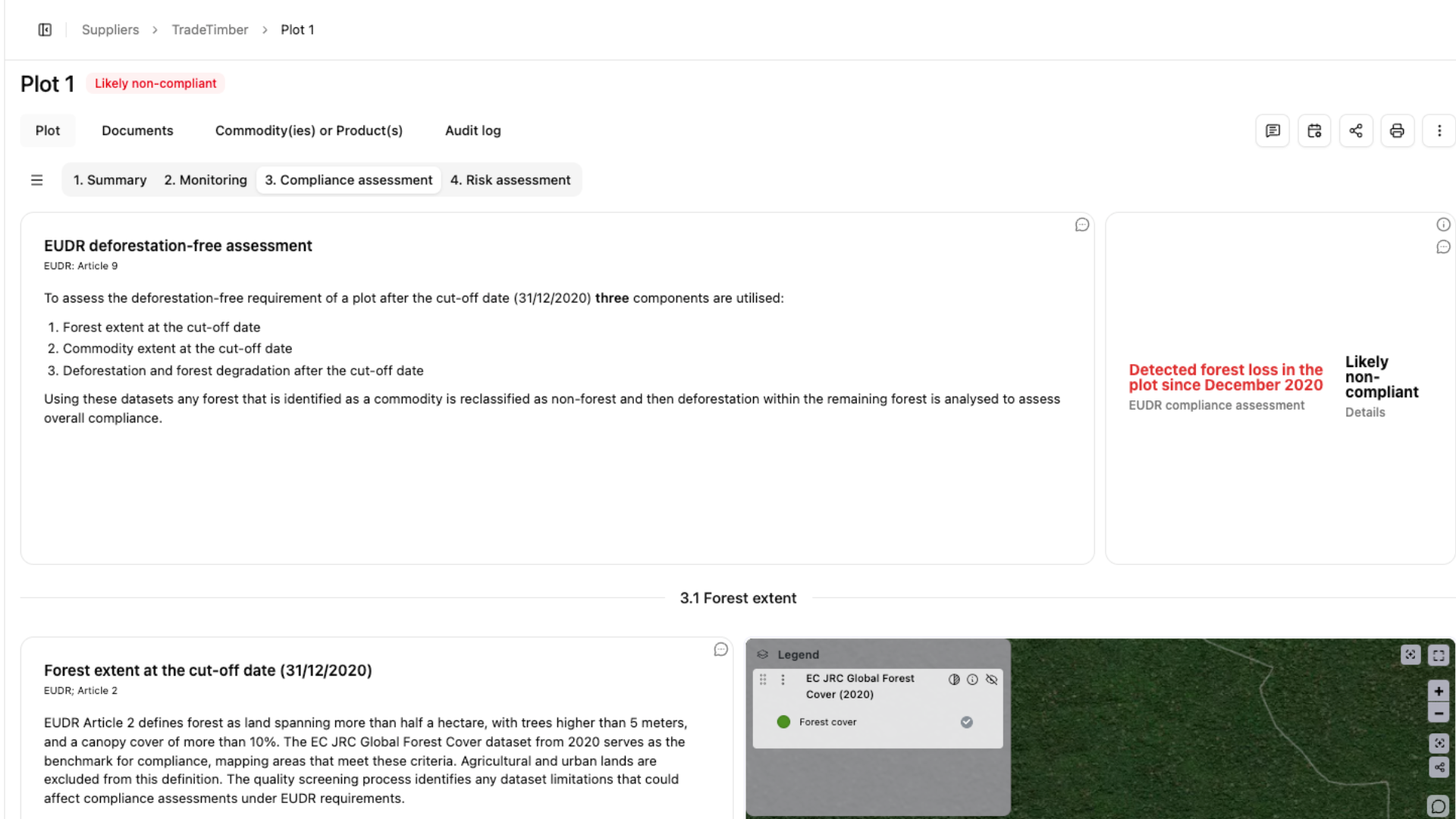
Every plot screened against Sentinel-2 and radar imagery for clearance after 31 December 2020.
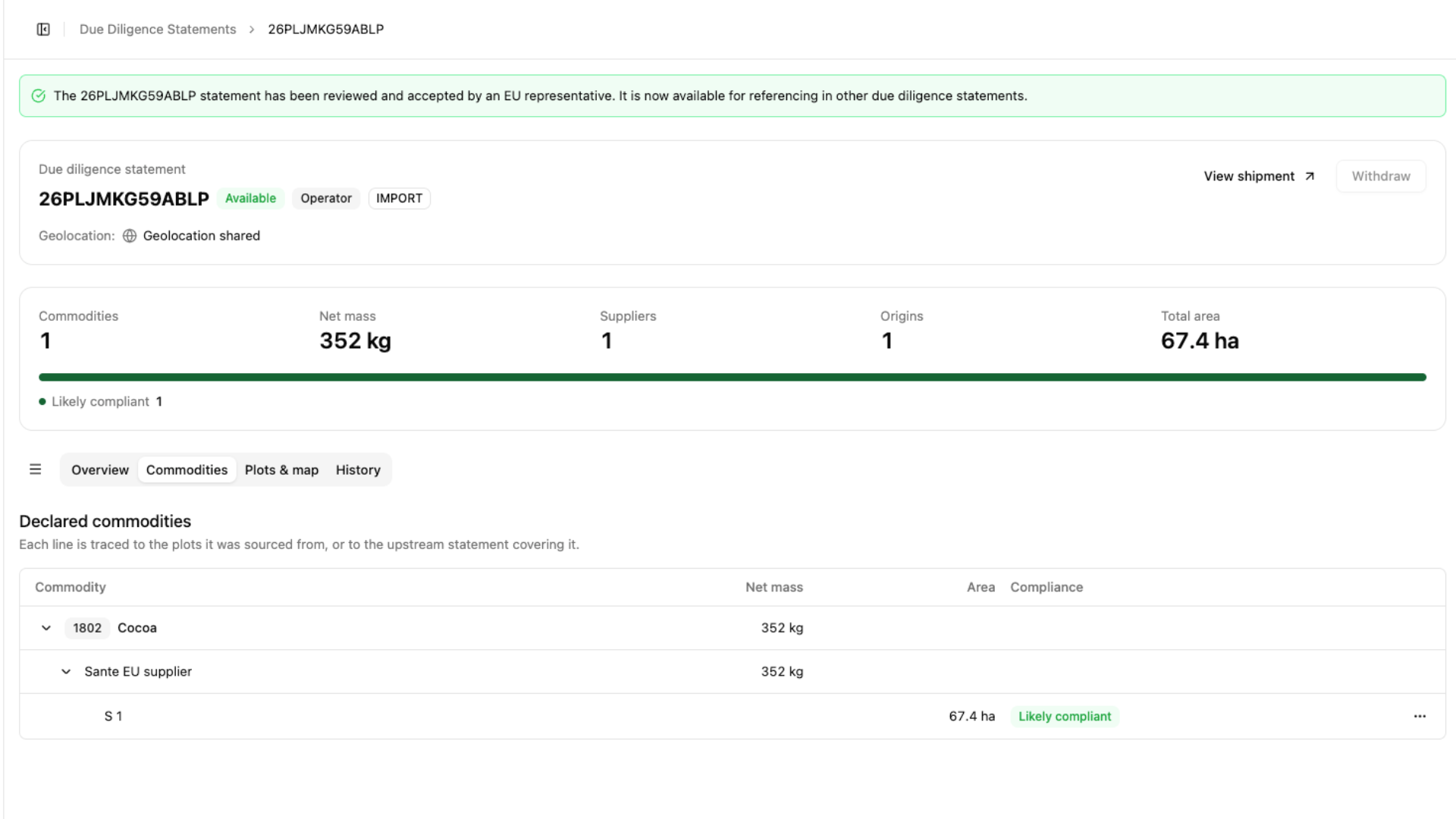
Coordinates pre-filled, EORI entered once, statement submitted through the EU's API.
No. One statement can cover several batches and different products, and can be prepared up to a year in advance. Each customs declaration still has to carry the reference number of a valid statement.
If your supplier already placed the product on the EU market, you don't file a statement at all: you are a downstream operator or trader. If you import the product, you are the operator and the statement is yours, even if your supplier helps with the data.
Five years. That covers the statement and the information behind it: plot data, checks and your risk assessment.
A simplified declaration is a one-off filing for micro and small primary operators in low-risk countries that produce and place their own products. They get a declaration identifier, which their buyers use. Everyone else who places products on the market files due diligence statements.
Yes. You can appoint an authorised representative, or use software that files through the information system's API. You stay responsible for what the statement says.
For outages longer than 60 minutes, a contingency procedure gives a temporary reference number, so customs clearance can go ahead.
Yes. The information system has a verification service for downstream operators and traders, so you can confirm that a reference number or declaration identifier exists and is valid before you rely on it.
Yes. The information system has an API for statements and simplified declarations, and it was updated in November 2026. Companies filing many statements usually connect through software that uses it, such as Orbify, instead of typing each one in.
This page explains the regulation in plain terms. It is not legal advice.
Related: EUDR deadlines: which date applies to you · EUDR compliance with Orbify · What happens at customs after 30 December
One call. We go through your products, your role and your suppliers, and tell you exactly what you have to do.